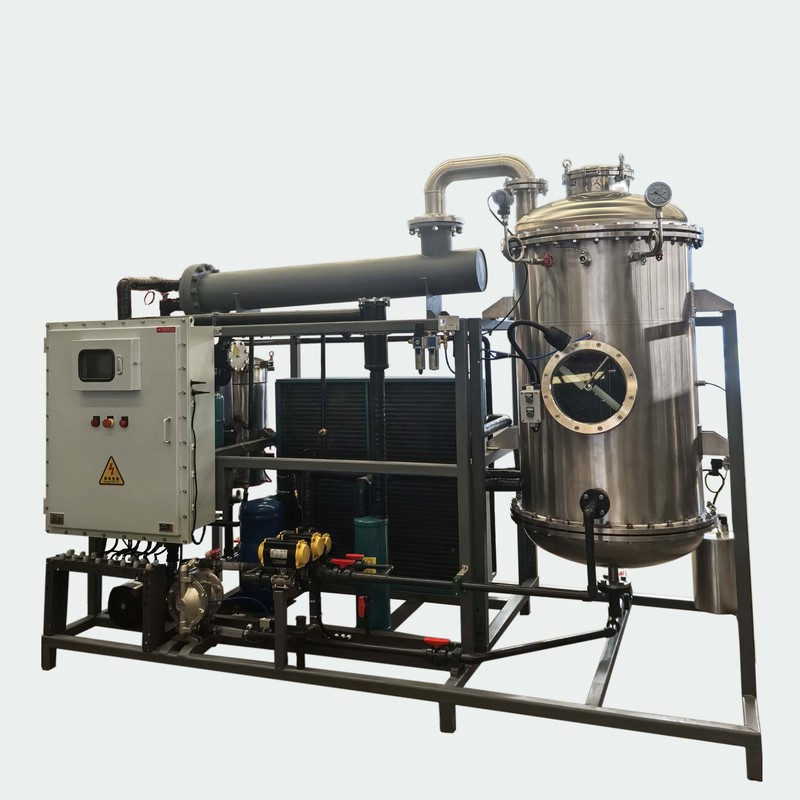
High-salinity wastewater treatment equipment containing 10% sodium hydroxide
High-salinity wastewater treatment equipment containing 10% sodium hydroxide
High-salinity wastewater treatment equipment containing 10% sodium hydroxide
- Detail
- Parameters
The wastewater in this treatment system mainly consists of high-salt wastewater containing 10% sodium hydroxide.
The design utilizes a low-temperature steam crystallizer process for deep evaporation at ambient temperature to remove heavy metals, salts, and most organic substances. The process steps are:

Process Flow Design and Control Instructions
1) Raw Liquid Tank (Provided by Party A)
Collect the residue from the first evaporation or raw liquid; (if necessary, collect high-concentration, high-salinity wastewater and adjust acidity/alkalinity to ensure inlet liquid pH is 6-9.)
2) Steam Low-Temperature Crystallizer (Provided by Party B)
The waste liquid enters the steam low-temperature evaporator, where it is evaporated at a relatively low temperature. The steam is discharged and condensed through circulating cooling water to produce distilled water, which is then sent to the secondary biochemical treatment system. The crystallized concentrate returns to the collection device or is handled by an external party. It can remove heavy metals and most inorganic salts.
Main Equipment: Evaporator.
Control Instructions: Start when the liquid level in the raw liquid tank rises; stop at low liquid level.
3) Effluent Tank (Provided by Party A)
Collection tank for the effluent after evaporation, collecting clear water for reuse or further treatment.
4) Waste Tank (Provided by Party A)
Collection tank for the concentrated material after evaporation, to be handled externally.
5) Cleaning Tank (Provided by Party A)
Used for daily cleaning and maintenance of evaporation equipment and auxiliary facilities.