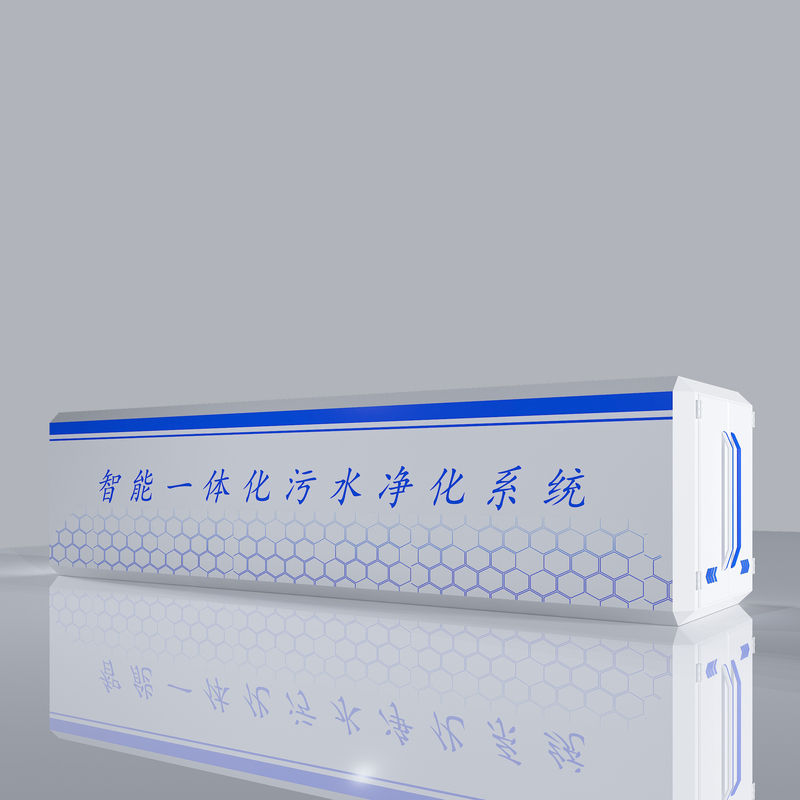
A complete set of sewage treatment equipment for makeshift hospitals
A complete set of sewage treatment equipment for makeshift hospitals
A complete set of sewage treatment equipment for makeshift hospitals
- Detail
- Parameters
Inemergencymedicalfacilities,makeshifthospitalsplayacrucialrole. However,the sewage it produces poses aserious threat to the environment and public health if not properly treated.In order to effectively solve this problem,we have launched professional shelter hospital sewage treatment equipment,committed to providing efficient and reliable sewage treatment solutions for makeshift hospitals.1.Description of treatment process The equipment is mainly for the treatment of domestic sewage and similar industrial sewage,and adopts mature and reliable biochemical treatment technology -contact oxidation method.The water quality parameters are calculated according to general domestic sewage,the influent BOD5 is designed as 200mg/L,and the effluent BOD reaches the index of 20mg/L.The whole set of equipment consists of the following six parts:Primary sedimentation tank:It adopts avertical flow sedimentation tank,and the sewage rise rate is 0.6-0.7mm/s.The settled sludge is lifted to the sludge tank through air (note:when the treatment volume is 0.5-5m3/h,the primary sedimentation tank can be dispensed with), and most of the suspended matter that can be precipitated in the sewage is removed through the initial sedimentation,reducing the load of the subsequent treatment unit.Contact oxidation tank:The sewage after initial settling stalks enters the contact oxidation tank for biochemical treatment,with a total residence time of more than 4hours,and the contact oxidation time of the enhanced equipment can reach 6hours.The ratio of filler to water area is 160m2:1m3,and the gas-to-water ratio of the contact tank is about 12:1(Note:when 0.5-5m3/h,the contact tank is secondary). In contact oxidation tanks,microorganisms use organic matter in sewage for metabolism and decompose it into harmless substances such as carbon dioxide and water to purify sewage.Secondary sedimentation tank:The biochemically treated sewage flows into the secondary sedimentation tank,which is two vertical flow sedimentation tanks running in parallel,with an ascent flow rate of 0.3-0.4mm/s.The sludge discharge is lifted into the sludge tank by air (Note:at 0.5-5m3/h,the sludge flows into the sludge tank by itself). The function of the secondary sedimentation tank is to separate the activated sludge in the biotreated sewage from the treated water to ensure the clear quality of the effluent.Disinfection tank and disinfection device:The disinfection tank is in accordance with the "TJI4-74"standard,and the stay time is 30 minutes;If hospital sewage is treated,the residence time can be increased to 1-1.5hours.The ozone generator disinfection method is adopted,and the disinfection tank and disinfection device can automatically adjust the dosing amount according to the amount of water output,so as to achieve more water and more medicine,and less water and less water.If used for industrial sewage,the disinfection tank and disinfection device can be configured according to the actual situation.Disinfection is crucial to ensure the safety of effluent and prevent the spread of diseases by killing pathogenic microorganisms in sewage.Sludge tank:The sludge in the primary sedimentation tank and the secondary sedimentation tank are lifted to the sludge tank by air for aerobic digestion.The sludgetanksupernatantisreturnedtothecontactoxidationtankforfurthertreatment,andtheremainingamountofsludgeafterdigestionisverysmall,generallycleanedonceevery1-2years,andthesuckingtruckcanbeusedto extend thesludgetankinspectionholeintothebottom of thesludgetank during cleaning(At 0.5 - 5m3/h, the sludge is digested anaerobically). The setting of the sludge tank realizes the effective treatment and disposal of sludge, reducing the risk of secondary pollution. Fan room, fan: The fan room is located above the disinfection tank, the entrance is double-layer sound insulation, and the air inlet is equipped with a fan filter, which has low noise during operation. Equipped with two L-shaped roots blowers, which can operate automatically and alternately, the operating life of a single fan is about 30,000 hours. The fan provides sufficient oxygen for the entire treatment system to ensure the normal metabolic activity of aerobic microorganisms, and is one of the key equipment to ensure the treatment effect. 2. Advantages and characteristics of equipment Excellent effluent water quality: after multiple treatment processes, it can effectively remove pollutants such as organic matter, nitrogen, phosphorus, suspended solids and pathogenic microorganisms in the sewage