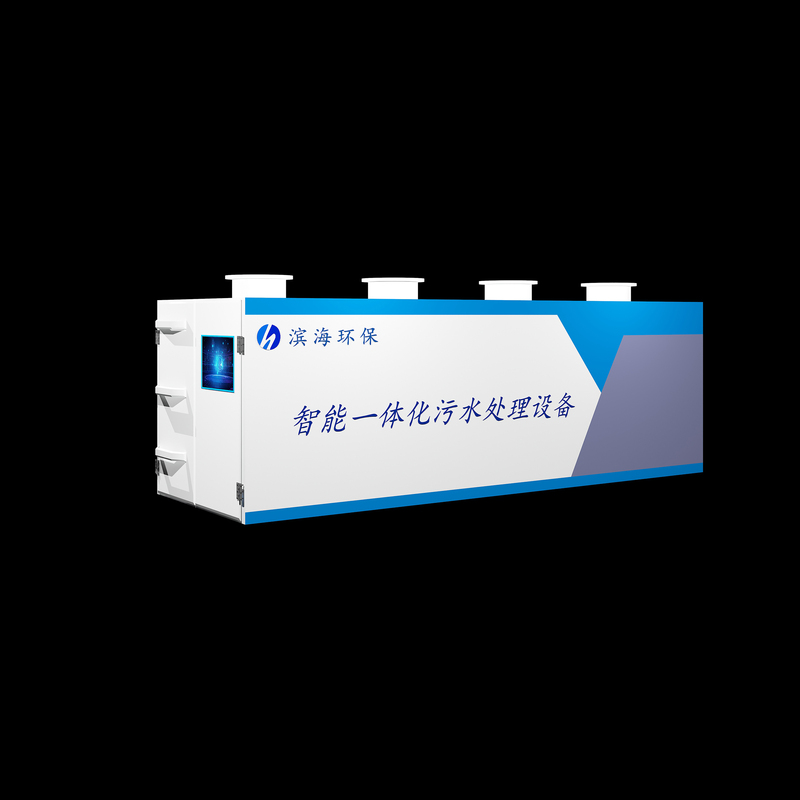
Integrated sewage treatment equipment
Integrated sewage treatment equipment
Integrated sewage treatment equipment
- Detail
- Parameters
Integrated sewage treatment equipment is a device that highly integrates multiple sewage treatment units such as primary sedimentation tank, contact oxidation tank, secondary sedimentation tank, sludge tank, etc., and can efficiently treat domestic sewage and industrial wastewater. Here is a specific introduction:
Working principle: Firstly, physical treatment is carried out through grilles, sedimentation tanks, etc. to remove large suspended particles; Then, using biological treatment technologies such as activated sludge process and biofilm process, organic matter is degraded by microorganisms to convert pollutants into harmless substances; Finally, advanced treatment techniques such as filtration, adsorption, and ion exchange can be used to further remove trace harmful substances and bacteria, ensuring that the effluent quality meets the standards.
Main components: usually including hydrolysis acidification tank, contact oxidation tank, impurity sedimentation tank, disinfection treatment device, and sludge aerobic digestion tank. Hydrolysis acidification tank can improve the biodegradability of sewage; The contact oxidation tank degrades organic matter through aerobic bacteria; Impurity sedimentation tank is used for settling and removing detached biofilms and some small particles; Disinfection treatment selects appropriate methods to kill bacteria according to the type of sewage; The aerobic digestion tank for sludge stabilizes the remaining sludge.
Process selection: Common processes include A/O process, SBR process, CASS process, MBR process, etc. Different processes are suitable for different water quality and treatment requirements, such as MBR process combined with membrane separation technology, resulting in good effluent quality that can approach the standard of reclaimed water.
Advantages: Strong resistance to impact loads and long average residence time of contact oxidation method. It has the ability to remove nitrogen and phosphorus, and can treat various types of wastewater. The filling material has a large specific surface area and high contact efficiency between sewage and biofilm. The effluent quality is stable and the sludge production is low. The equipment can be buried underground, does not occupy ground space, can be greened on the upper part, and is easy to achieve automatic control, with simple management and operation. It can also be made mobile and flexible in application.
Disadvantage: After the equipment malfunctions, maintenance is inconvenient. Weak adaptability to the environment, requiring anti freezing, deep burial, and insulation in winter in the north, and flood control in summer in the south. It is generally suitable for projects with small amounts of wastewater, and the cost of replacing and cleaning the packing and MBR membrane is high. Long term burial or exposure to sunlight can easily corrode and affect the service life.
Scope of application: It is widely used for the treatment and reuse of domestic sewage in residential areas, villages, schools, hospitals, shopping malls, tourist attractions, and other places, as well as for the treatment and reuse of organic wastewater from small and medium-sized industries such as slaughter, aquatic product processing, and food. The effluent quality can usually meet the national comprehensive sewage treatment discharge standard level B standard.